
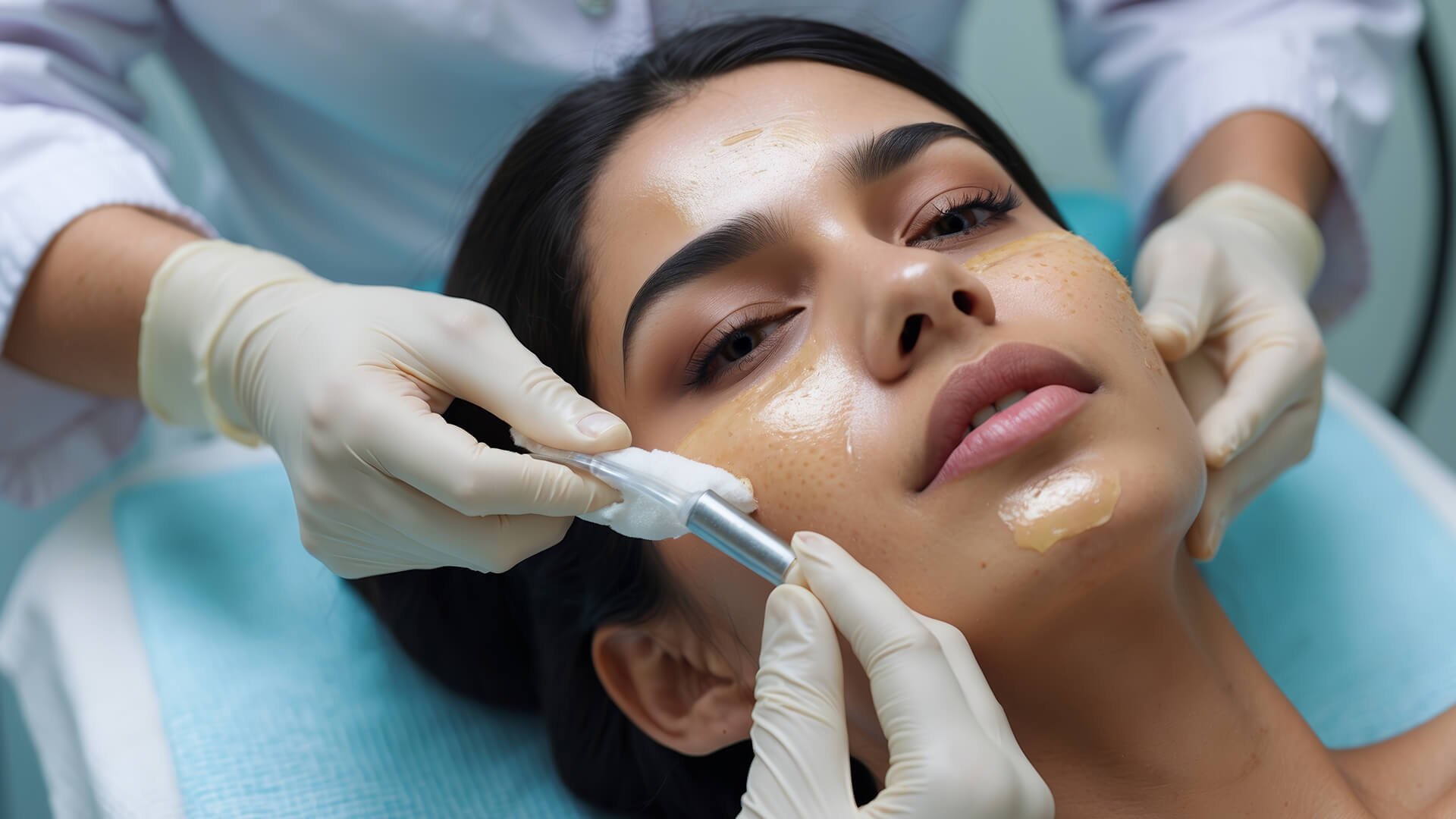
Chemical Peeling: A Dermatologist’s Guide to Brighter, Clearer Skin
Chemical peeling is a widely used dermatological procedure designed to improve skin texture, clarity, and tone. When performed correctly, it is a safe, effective, and scientifically grounded treatment for a variety of common skin concerns. Despite its popularity, many misconceptions surround peels — particularly regarding safety, downtime, and suitability for Indian skin.
What is a chemical peel?
A chemical peel is a controlled skin-resurfacing procedure where specific acids are applied to the skin to gently exfoliate damaged outer layers. This process stimulates cell turnover, revealing fresher, healthier skin underneath.
Peels are medical treatments, not simply cosmetic facials, and should be chosen based on skin type and indication.
What concerns can chemical peels address?
How do chemical peels work?
Chemical peels accelerate skin renewal by removing excess dead cells and promoting regeneration. Different peeling agents act at different depths:
* Superficial peels – Gentle exfoliation with minimal downtime
* Medium peels – Deeper action for targeted concerns
* Deep peels – Reserved for specific medical indications
In Indian skin, treatment depth must be carefully controlled to avoid unwanted pigmentation changes.
Psoriasis and Overall Health
Are chemical peels safe for Indian skin?
Yes when performed by qualified dermatologists using appropriate protocols. Indian skin has a higher tendency for post-inflammatory hyperpigmentation (PIH), making professional assessment essential.
Incorrect peel selection or unsupervised treatments often lead to complications.
Common myths about chemical peels
Myth: Peels thin the skin
Reality: Properly administered peels improve skin quality and renewal
Myth: Peels are extremely painful
Reality: Most medical peels cause only mild, temporary sensations
Myth: Peels give instant dramatic results
Reality: Peels work gradually and often require multiple sessions
What to expect after a peel
Who should avoid chemical peels?
Chemical Peels in RA Puram, Chennai
Chemical peeling is not a one-size-fits-all treatment. A customized approach based on skin type, concern, and tolerance yields the best outcomes while minimizing risks.